How to Store Wine at Home – Expert Tips
How to Store Wine at Home: Wine has been made for thousands of years, and it’s been in our lives for a long time. Ancient Romans stored wine in massive earthenware jars, known as amphorae, and years later, European wine was traditionally stored in cool, dark cellars.
Light, heat, high levels of moisture and high temperatures can all spoil your wine. If you don’t store your wine properly you can end up with a drink that loses its taste, smell and entire character, which is very frustrating when you have been saving it for a special occasion.
The even better news is that there is no need for a cellar to store wine the right way. Read on for some simple advice on how to store wine at home.
1) Keep the Temperature Stable
Wine ageing is influenced by the temperature. An average temperature, approximately 10°C-15°C, is recommend for long term wine storage. Wine should be kept above 20°C to prevent accelerating the ageing process and potentially harming the wine over time.
Frequent temperature fluctuations can result if the bottle of wine is left next to an oven, radiator, boiler, or some other heat source.
The recommended serving range varies by wine:
- Sparkling wine – 6°C to 10°C
- Light white and rosé – 7°C to 10°C
- Full-bodied white – 10°C to 13°C
- Light red – around 13°C
- Medium to full bodied red 15°C to 18°C
2) Keep Wine Away From Light
Some wine styles can be affected by exposure to light –particularly direct sunlight – since light induces chemical changes to a wine’s aroma and flavours. Light wines, particularly white wines, and especially so if sold in clear or lightly coloured bottles, can be affected by exposure to light.
Choose a dark cupboard, cellar or lock-up wine cabinet. It doesn’t have to be totally dark, but sunlight – particularly direct sunlight – can harm the wine and should be minimised.
3) Lay Corked Bottles Down
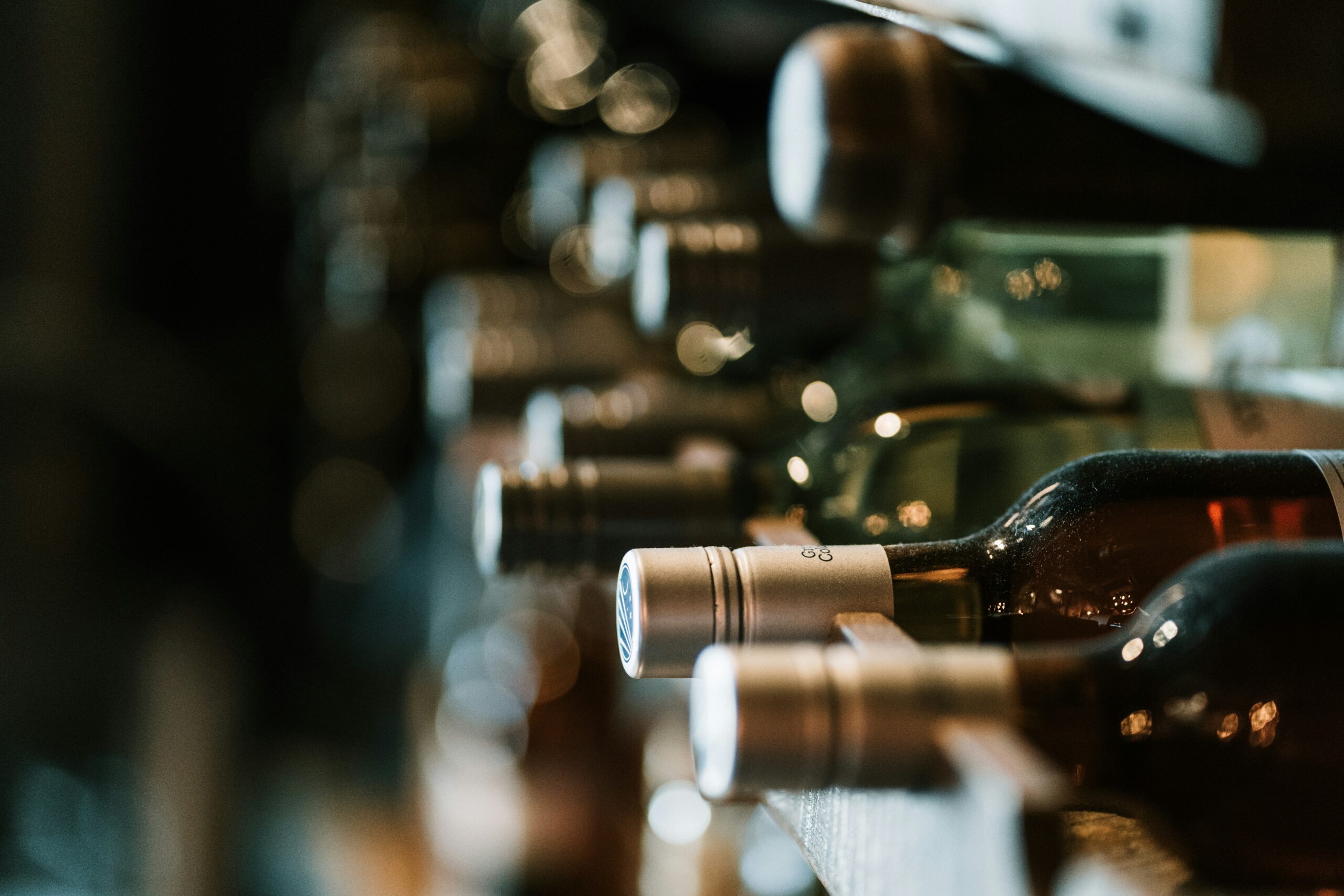
Bottles with a natural cork seal are usually stored horizontally. This makes sure the cork is moist and keeps it from drying up. A dried out cork can shrink causing the cork to let air in the bottle, which is bad for the wine.
It is not true of screw-cap bottles. They don’t need to be stored upright and can be used without alcohol contact to maintain the seal. However, long-term storage of sparkling wine with a cork closure can also be performed horizontally.
4) Use Proper Wine Racks
A good bottle rack provides a sturdy support for wine bottles, especially when they are stored on their sides. It also provides a means of storage and organisation of your wine.
For collections of larger sizes, racks for storing wine bottles can help utilise available space more effectively. Bottles come in various shapes, including Champagne and other larger formats as well as 750ml standard size bottles.
The rack must also be robust enough to support a full set of storage. Bottles are heavy when filled and stacked up, you wouldn’t want a rack that would buckle up under this kind of weight.
5) Keep Humidity Moderate
Humidity is only relevant for bottles sealed with natural corks. A dry atmosphere can dry out corks, while an excessively humid one can promote mould growth and label destruction.
Most wineries maintain storage humidity at 60% to 70% humidity. Anything above 50% can help prevent the corks from drying out, but there’s a limit, and overly damp conditions should be avoided.
The humidity level is not as critical for screw cap wines because the closure does not rely on a cork remaining pliable. This slightly alters the storage requirement of modern bottles sealed in this manner.
6) Reduce Vibration
Wine that is kept for many years must sit in a place that has very little to no vibration as this can move the sediment around. Moving wine can affect its ageing process over time.
Separate bottles from washing machines, tumble dryers and other appliances that vibrate regularly. Ordinary movement around the home is not a problem. It is vibration for months or years that causes it.
7) Store Wine Away From Strong Smells
Wine must not be stored next to painting, cleaning and solvent products or anything with a strong smell. As natural cork is not an airtight seal it should be stored in a clean, odour-free environment for long term storage.
Because of the potential for temperature fluctuations and the kitchen is not a good option. Cool cupboard, cellar, or wine cabinet there is and wine this hot at or near to the oven, hob, dish washer or other device.
An Age-Worthy Wine
A good bottle should have a proper place for a good long sit – if it will be sitting around for a few years. Proper temperature, darkness, appropriate humidity, and good storage all go to help preserve a bottle for aging. Bottles sealed with cork are also best stored properly so that cork remains healthy.
Some wines are meant for drinking early; others are built to age for decades. With the proper storage conditions, these flavours and aromas can be safeguarded. Even a little bit of attention to storing your wines properly can preserve your collection until you are ready to drink it.