Put the spring back into your garden with these expert March lawn care tips
Got a tired, thin and patchy lawn? Don’t worry – spring is here and this is the first month of an active lawn care programme. As the soil warms up and days lengthen, your lawn is receiving messages telling it to grow – so now is the perfect time to carry out some lawn maintenance with these lawn care tips.
Guy Jenkins, Consumer Manager at Johnsons Lawn Seed, shares his top tips:
Preparing your lawn for its first light cut
The first real maintenance task of the season is to mow the lawn. To do this effectively, it is first necessary to remove any debris such as dead leaves, twigs, branches, etc. that may have fallen onto the lawn over the winter months. The best tool for this is a stiff-bristle broom to collect up as much debris as possible. After this it will then be time to power rake the lawn, which will bring the grass up from the soil, whilst also removing any dead and decaying plant matter, and moss.
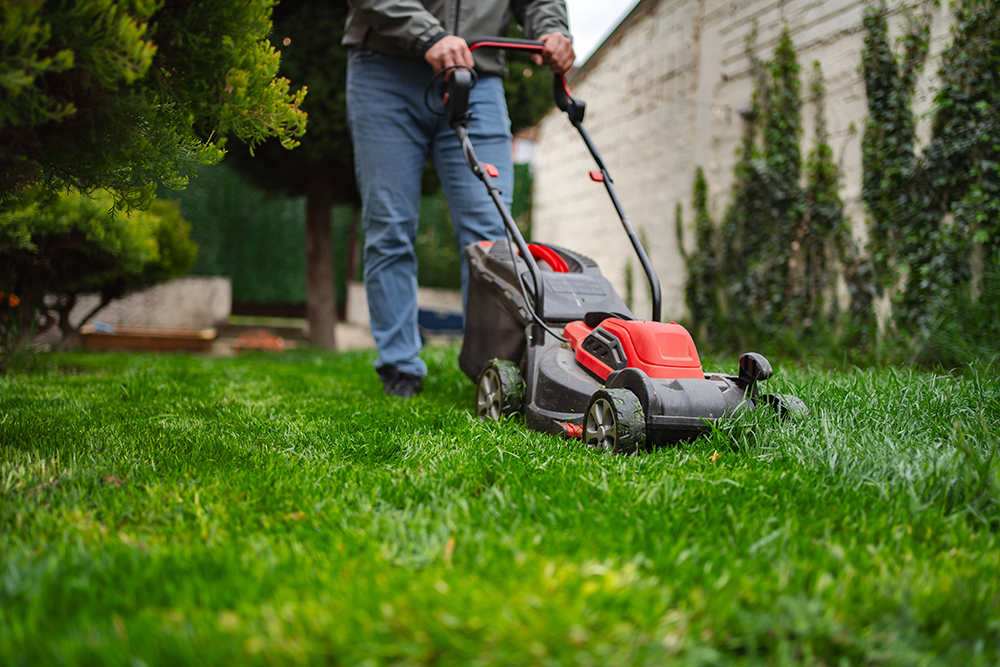
Leave grass and weeds a minimum of 2-3 inches. This will ensure they are tall enough to be cut by your mower.
It is still not necessary to remove more than a small proportion of the grass growth and at present we are only recommending two light scalping cuts using the mower blades in their highest position, with only two mower passes required. It is particularly important that we do not leave the lawn too long in this state in the early season, as this can leave the sward in a very weak condition.
Following a mow, it is also important to take a little time to maintain the lawn edges by trimming in and of any overgrowth to ground level.
If you are not using a rear roller on your mower, then an early indication of the approaching Spring is the time to give your lawn a light roll. The ground must be dry and not waterlogged, which is generally in the early Spring. Rolling helps to ensure that your lawn is level with the ground and eradicates any bumps that may have developed through the winter months, caused by frost.
Overseeding
March is a good time to start the process of lawn restoration. With soil temperatures rising, grass seed will germinate more readily. This is also a good time to deal with patches in the lawn that have been worn away and to sow bare patches.
Overseeding is one of the simplest and most effective ways to bring tired, thinning grass back to life. By sowing new lawn seed directly into your existing lawn, you can fill bare patches, improve colour and texture, and encourage a thicker, healthier sward throughout the year. Professional groundskeepers use this technique routinely, and with the right preparation it can be just as effective in the home garden.
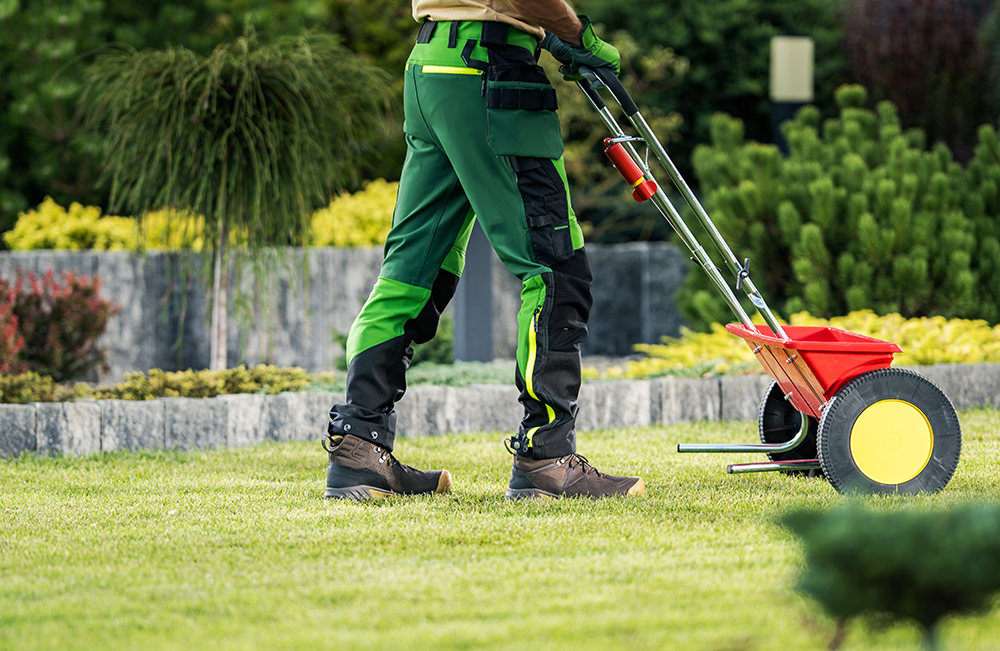
Overseeding is one of the simplest and most effective ways of improving a tired, thin lawn. By sowing new lawn seed into an existing lawn, it is possible to fill gaps, enhance colour and texture and to create a more dense lawn for year round use. Overseeding is a regular part of grounds maintenance but can also be very effective in the domestic garden with a little preparation.
Overseeding should be carried out in early Spring to feed the Lawn for future Summer growth or in early Autumn when the weather is cooler and the rainfall is more active. Both of these periods give the best chance of a successful reseeding and a good root growth.
The first mow of the season
1. Mow your lawn to a height of ground and preferably in dry weather to remove lawn mowings and other obstructions to allow new seed to fall to the ground.
2. Rake lawn heavily to remove old dead grass and thatch.
3. Use a fork or lawn aerator to loosen the soil and to try and reduce soil compaction and to help with drainage.
4. Light scattering of top dressing to fill in any depressions and to help improve soil texture.
5. Feed the lawn with a seasonal fertiliser.
Sow the seed evenly over the area to be sown. Sow directly into moist soil at a rate of around 25g/sqm or as indicated on the packet of seed. Rake in and tread in to create good contact between soil and seed. Leave unrevised seedlings to establish themselves before allowing access. Water with a fine spray if necessary, particularly if the weather is very dry.
New grass should be cut for the first time when it is about 5-8cm (2-3in) high. As the grass grows over the seasons, height for future cuts should be gradually reduced. Always bear in mind that no more than one-third of the grass should be cut with one pass of the mower.