Buying for Siblings: How to Keep Birthdays and Christmas Fair
Every parent of more than one child knows the moment. One child’s birthday arrives, the presents are opened, and a small figure in the corner is watching every parcel with an expression of quiet calculation. Buying for siblings isn’t just a shopping problem. It’s a diplomacy problem.
The good news is that a few simple principles make it far easier, and the best gifts for brothers and sisters often turn out to be the ones that don’t create competition in the first place.
Fair doesn’t mean identical
The instinct is to match everything: same number of presents, same budget, same size of box. It works for a while, but as children get older it breaks down, because their interests and needs diverge. A seven year old and a three year old don’t want the same thing, and pretending they do usually means one of them gets something they’re not ready for.
A more useful rule is that every child should get something that’s right for them, and that the overall spread feels roughly balanced. Children are better at accepting differences than adults expect, as long as they can see they’ve been thought about.
Milestone items that belong to one child
Some presents are best given to one child because they mark a moment. A first proper bicycle is the clearest example. Browse a range of kids’ bikes and you’ll see that sizes are matched to height rather than age, so a bike that’s perfect for an older child won’t suit a younger sibling, and vice versa.
That makes it a gift with a built-in rule: it belongs to the person it fits. Handing it down later, when the next child reaches the right size, can be a milestone of its own. Being the one who gets the hand-me-down bike can feel like a rite of passage rather than a consolation prize, particularly if it’s freshly cleaned and comes with a new bell.
A practical point for the sibling watching from the pavement: if the younger one is on a balance bike or scooter, let them join the ride, and make sure every helmet is properly fitted. Nothing causes more resentment than being left at the door.
Presents that work for everyone
For the gaps between milestone gifts, the best choices are things siblings can use together. Imaginative play is particularly good for this because it stretches across ages. An older child will run the story, a younger one will happily take a role in it, and both end up occupied.
A doll set with furniture and accessories is a good example. A younger child enjoys the characters and the routine of feeding, bedtime and dressing, while an older one builds elaborate plots around the same pieces. The set doesn’t belong to either of them, which cuts down on arguments, and it takes up less room than two separate collections.
The thing to check is that there’s enough in it to share. Several figures and a handful of flexible accessories beat a single doll with a lot of props, because everyone needs somewhere to be in the story.
Avoiding the “that’s mine” problem
Shared presents work best when the ground rules are set early. Say plainly which things are shared and which are personal, and give each child a place for the things that are theirs. A lidded box or a particular shelf is enough. Children who know their special things are safe tend to share the rest more generously.
It also helps to label. Names on the underside of toys sound fussy but save a lot of trouble, particularly when friends come over.
Handling the age gap
When siblings are far apart, safety is the main consideration. Toys for older children often have small parts that aren’t suitable for under threes, so check age markings and store these items out of reach. A lidded box on a high shelf is better than good intentions.
For the older child, it’s worth making sure they don’t feel they’re being asked to give up their things. Having somewhere that’s genuinely theirs, and permission to say so, makes them far more patient with a younger sibling.
Make the occasion about the person
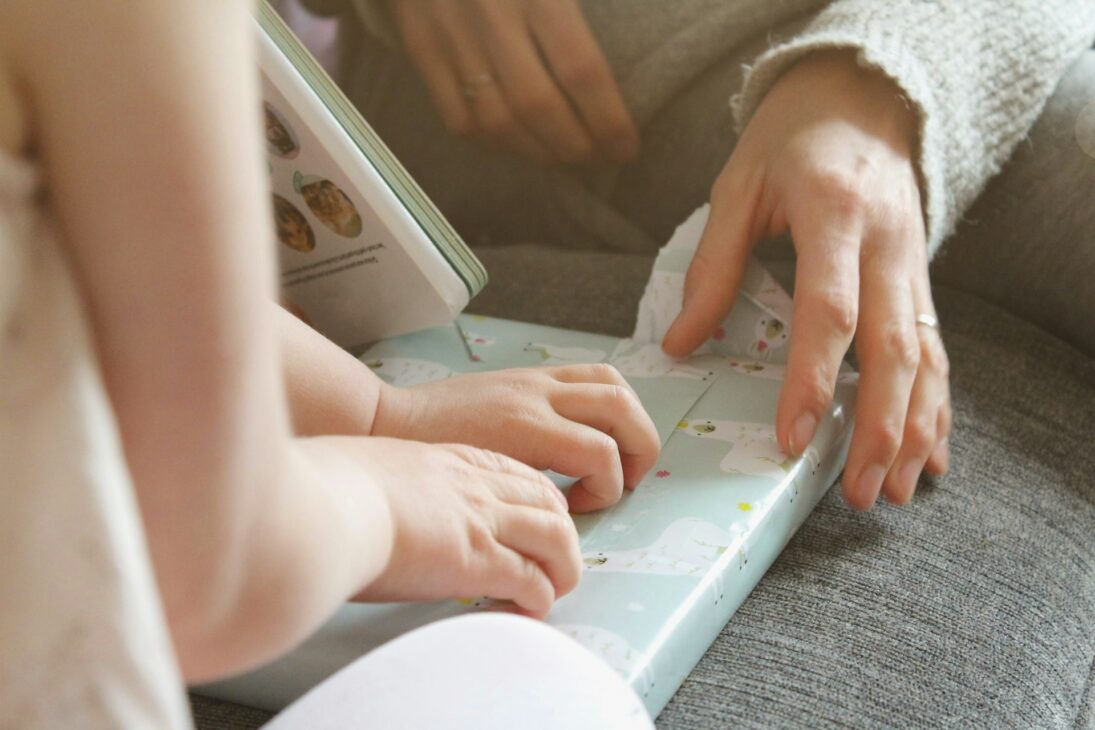
On a birthday, the birthday child gets the spotlight. Smaller treats for the sibling, like a little something to open or a job to do on the day, can head off the sulk. Some families let the sibling choose the card or help with the wrapping, which gives them a stake in the day.
At Christmas it’s the opposite problem: lots of presents all at once, with everyone comparing. Spacing the opening out, taking turns, and letting each child enjoy what they’ve got before moving on makes the morning calmer and the presents more memorable.
Dealing with the green-eyed moment
Even with careful planning, jealousy will turn up eventually. It’s normal, and usually short lived. Acknowledging it without fuss tends to work better than lectures about gratitude. Something like “it’s hard when it’s not your turn” is often enough, followed by a distraction or a job to do.
What helps most is knowing that their turn will come. Children who can see the pattern, that every birthday gets its day, tend to be far more gracious than ones who suspect the scales are tipped.
The bottom line
Fairness between siblings is less about the arithmetic and more about the feeling. Choose things that suit each child, include some that suit them all, and everyone tends to go to bed happy.