Things to Know Before Buying Dijon Limestone Tiles
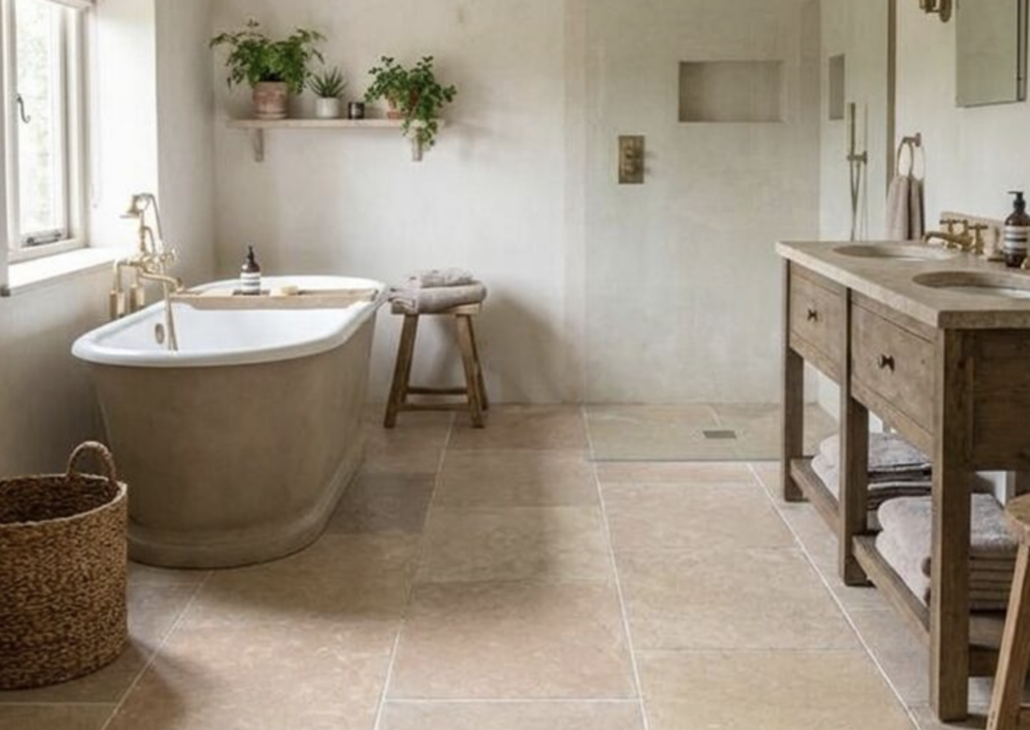
How to Choose Dijon Limestone Tiles:The warm, soft veining of Dijon limestone can make any bathroom feel calm the moment you step in. Traditional homes live on these beige-grey tones, but now, modern homes too vouch for Dijon limestone tiles to create clean and statement bathrooms.
Like any other luxury item, this stone asks for a little extra attention compared to porcelain, though. Limestone is porous; it needs sealing and a gentle cleaning routine, especially in a room that sees steam, splashes and soap every day.
Here is what to know before you buy Dijon limestone tiles, how to seal and look after them, and how to style it so the room feels relaxed rather than fussy.
Why Dijon Limestone Suits a Bathroom?
Natural stone has always been a designer’s favourite underfoot when it comes to personality and originality. Homes & Gardens’ round-up of 15 bathroom flooring ideas designers always return to puts real stone first, praising the way each piece carries its own pattern and variation.
However, it adds a caveat worth remembering: stone bathroom floor tiles need sealing to protect against stains and moisture due to their porous nature.
Dijon is a dense limestone with subtle tonal shifts and the occasional small fossil marking. Royale Stone describes it as dense and more forgiving than other stones such as travertine, which is reassuring in a busy family bathroom.
How to Style Dijon Limestone in a Bathroom
With Dijon tumbled limestone tiles, warm and quiet colours work best. Soft white, natural oak, and painted joinery all sit well with limestone and brushed brass or soft black fittings add definition without competing.
Let the stone be the hero. Because it varies naturally, keep the walls simple with a warm white or muted plaster shade. This allows the natural tones and texture of your bathroom floor to stand out without competing with bold patterns elsewhere.
While you are refraining from bringing colour, you can add interest through textures. A linen shower curtain, a woven basket, a wool or cotton bath mat, and a plant that enjoys steam. Warm lighting shows off the stone’s gentle tonal changes far better than cool lights.
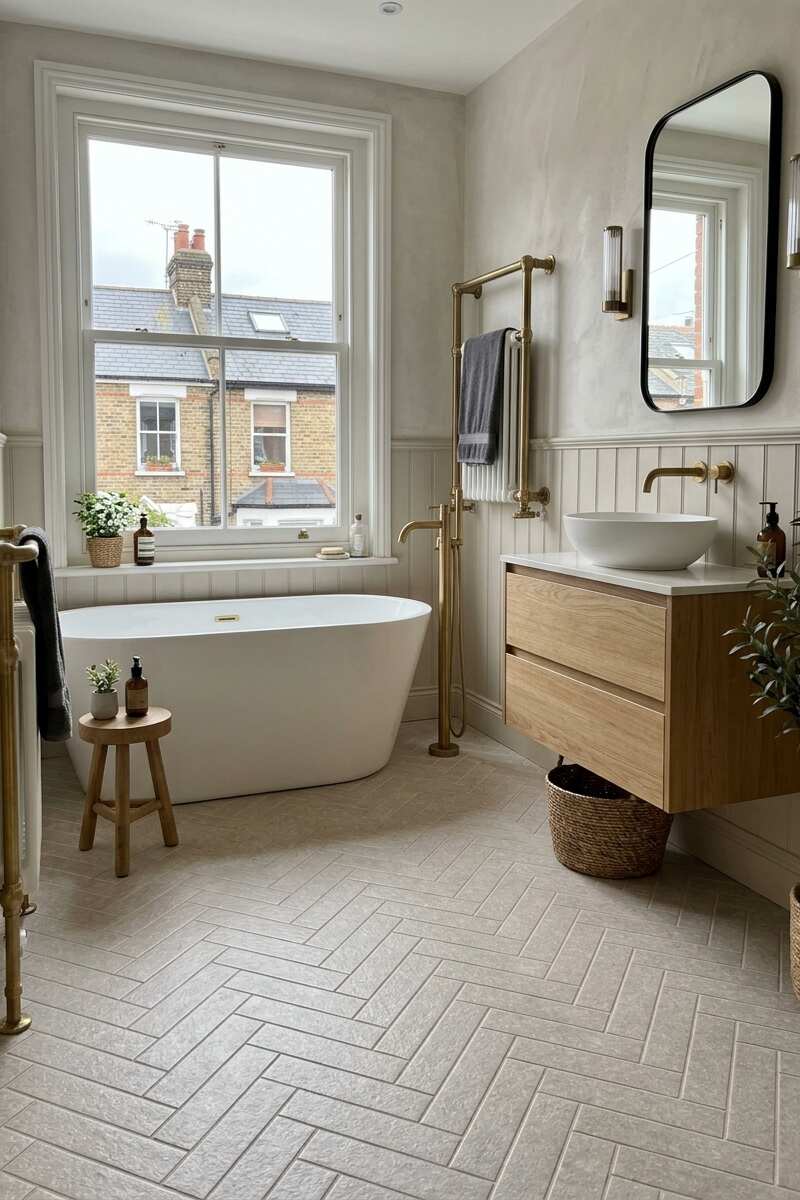
In small UK bathrooms, a herringbone layout adds movement without clutter. In larger bathrooms, bigger honed tiles give a calm, continuous look.
What Finish is Best for Bathrooms?
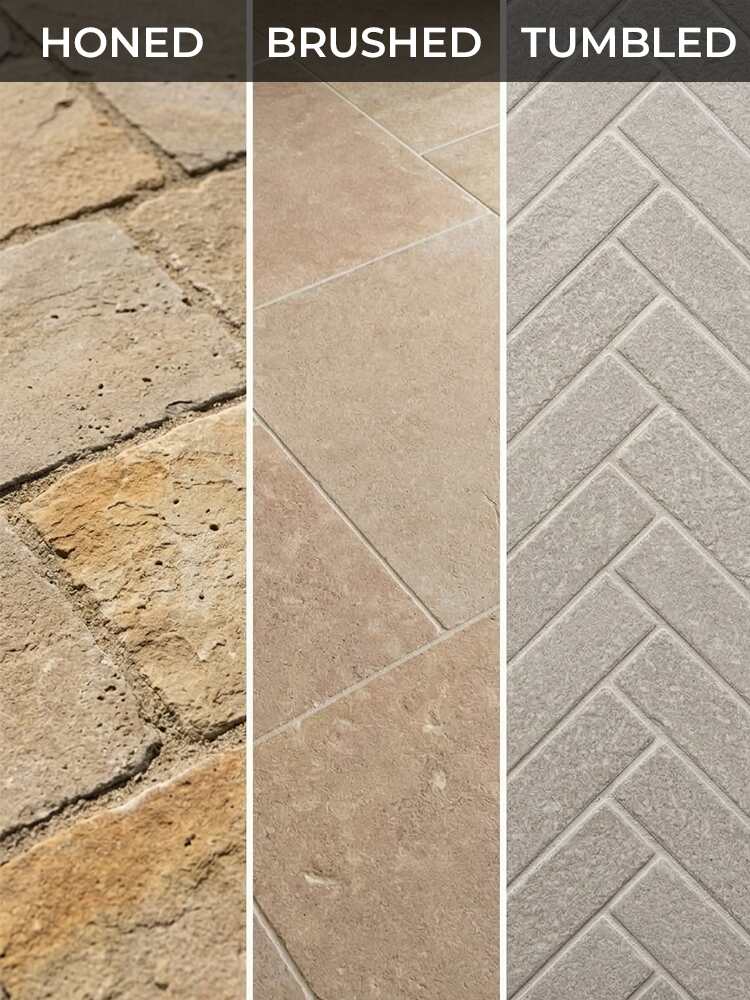
How a floor tile is finished changes the look and feel of it underfoot. That is why it is crucial to choose on purpose, not what comes in sight first.
Honed finish has a smooth and matte surface and has the calmest look. Brushed adds a lightly textured surface with straighter edges. Tumbled finish softens the edges of the stone and the surface so the floor looks gently worn in, while tumbled takes that finish further. Many suppliers combine them, such as honed and tumbled, or brushed and tumbled.
For bathrooms, honed or lightly textured finish is ideal, for smooth and polished surfaces it becomes slippery when wet.
Tumbled and chiselled edges both bring character but in very different ways. Tumbled edges are soft and slightly worn, while chiselled edges are crisper and more irregular, which is closer to hand-split stones. Ask your supplier which edge styles come in the format you want.
When it comes to styles and movement without colour, nothing beats a herringbone pattern. Homes & Gardens notes that its zigzag layout can make even a small bathroom feel more spacious. Suppliers such as Royale Stones offer tumbled herringbone in small 200 x 50mm blocks within their range of indoor Dijon limestone tiles, alongside larger honed and tumbled formats at 900 x 600mm.
Pro Tip: Smaller tiles mean more grout lines, which gives more foot grip than large format tiles. And the grout needs sealing too.
What Should I Check Before Buying Dijon Limestone Tiles?
Before you set your heart on Dijon limestone tile, ask yourself a few questions to avoid expensive surprises later.
Slip Resistance: Ask for the slip resistance rating of the exact finish and size you are considering. Do not assume, as suppliers can advise on whether a particular tile suits a wet floor.
Thickness: Dijon tiles often come in 15mm or 20mm thickness, which is usually more than porcelain. Although this means strength, it may not be particularly good news because they would take more time to warm up over underfloor heating systems. Check and confirm anti-fracture matting and how the finished floor height will meet the doorway and neighbouring rooms.
The Floor Itself: Natural stone is massive and needs a solid, level base. In an upstairs bathroom, ask about the floor structure before ordering.
Tone and Grout: Natural stone varies in tones, veining tile to tile. So order samples and look at them in your own bathroom lighting. Choose grout similar to or lighter than the tile to avoid a framed and outlined look.
Furniture: Choose your bathroom vanity before tiling begins. Freestanding sink cabinets sit on the floor, and the tile runs to the base of the unit, so the layout, floor height and plumbing all need to line up and look synced. Water-resistant units still need splashes wiped away, and the same goes for limestone. Felt under any feet helps protect a surface that can scratch.
Dijon Limestone vs Dijon Porcelain Tiles
Although both options create almost the same warmth and neutral look, they perform differently in a bathroom environment.
Natural Dijon limestone is natural stone, which means it has the characteristic of stone: the colour variation, subtle veining, and occasional fossil marking. Many homeowners choose it for the natural character and depth it provides.
Dijon porcelain tiles, on the other hand, are manufactured to replicate the appearance of limestone while offering a less demanding maintenance routine. Porcelain is non-porous, does not require regular sealing and is generally more resistant to stains, moisture, and everyday bathroom products.
The choice comes down to priorities. If you want a floor with natural veining and genuine stone character, Dijon limestone is hard to beat. If you prefer the look of the limestone but with less maintenance time and no sealing commitment, Dijon limestone effect porcelain tiles can be a practical alternative.
For bathrooms with underfloor heating, porcelain heats up more quickly due to its lower thickness, while natural limestone tiles retain warmth for longer once heated.
How to Seal Dijon Limestone?
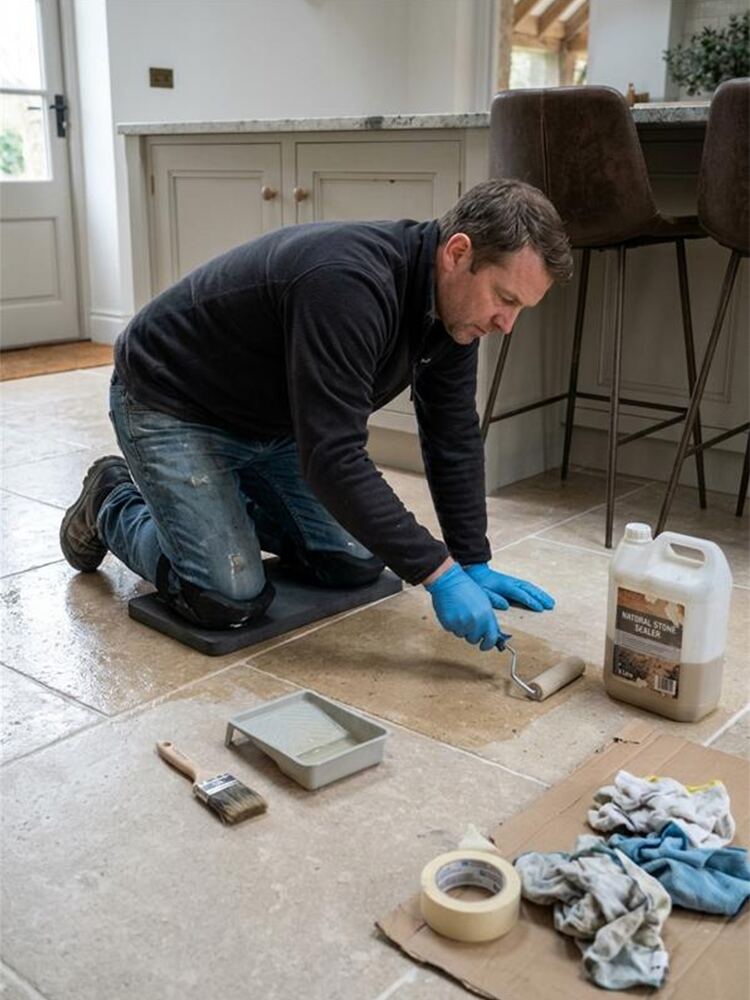
Sealing is one of the most important steps when it comes to limestone due to its porosity.
The usual advice? Seal the tile once laid, cleaned and completely dry, and then reapply a coat before grouting and another after. This layering protects the tile and the grout lines. Do not seal the tiles too early or when wet or uncleaned, as it can trap the moisture and dust underneath.
Atlas Ceramics’ video on sealing natural stone tiles demonstrates the process on limestone. The description sums up the aim of the video in one sentence: “seal them to protect them from any future damage or stains.”
How often to reseal limestone tiles depends on the type of sealer you use and how often the room is used. Royale Stones suggests sealing straight after installation and then annually for indoor Dijon, while other suppliers quote gaps of several years and advise more frequent checks in damp rooms such as bathrooms.
Do a simple test: put a few drops of water on the tile. If it beads, it means the seal is still intact. If it absorbs the water and darkens the stone, it means it is time to reseal. Always follow the sealer’s instructions when using a particular sealer.
How Do You Look After It Day to Day?
Keep your cleaning ritual simple and gentle. Sweep or vacuum with a soft brush attachment so the grout does not scratch the surface.
The most efficient way of cleaning natural stone is by using pH-neutral cleaners. Avoid acidic cleaners, including vinegar and some limescale removers. Limestone reacts to acid and can be dulled or marked by it.
To make it last longer, wipe spills quickly. Sealer can protect against everyday splashes but cannot fully protect against harsh chemicals and acidic spills such as citrus juice, wine, or coffee.
In hard water areas, dry shower tiles after use to help limit limescale, which means you will be reaching for harsh cleaners less and less. For more protection, add a bath mat by the shower or basin where wet feet or splatters happen frequently.
A Calm Floor That Rewards A Little Care
Dijon limestone may not be the lowest maintenance choice, but it is one of the more forgiving natural stones when sealed well. Choose a finish with some texture, get the sealing done at installation and keep cleaning gentle.
In return, you get a floor that has real character and a piece of nature in your home.