Renovate or Rebuild? A Builder’s Honest Take on Making the Right Call
Few questions are more important for a homeowner than this: you stand at the bottom of your collapsing old house, and ask yourself “shall we refurbish, or demolish?” Either way, you will get something wonderful. Either way, you can also end up with the wrong decision, based on instinct. Having lived on building sites, I’ve watched families make the right choice for the right reasons, and I’ve also watched the penny drop as a remodel revealed itself to be the wrong call. Here is a guide to this serious question.
Start with the bones of the house
Don’t be fooled by kitchens or floorplans, look at the structure first. Is the slab or subfloor level and stable? Does it have any movement: Cracks above the doors and broken seals on the doors? What’s the roof frame, the wiring and the plumbing like? Houses with good bones can usually be salvaged with a good renovation plan – but poor bones, non-working services and inadequate insulation mean a house could become a money pit, because every wall you open up to do the work leads to yet another surprise that’s not budgeted for.
A pre-purchase or pre-renovation building inspection is money well spent in this situation. It gives you facts rather than hope.
Be honest about what you actually want
What isn’t working in your current home? Not enough bedrooms? A small, dark living space? No connection to the outdoors? Too cramped for an older parent? Now consider if a renovation really is the answer or if you’ll be forever working around the constraints of the existing design.
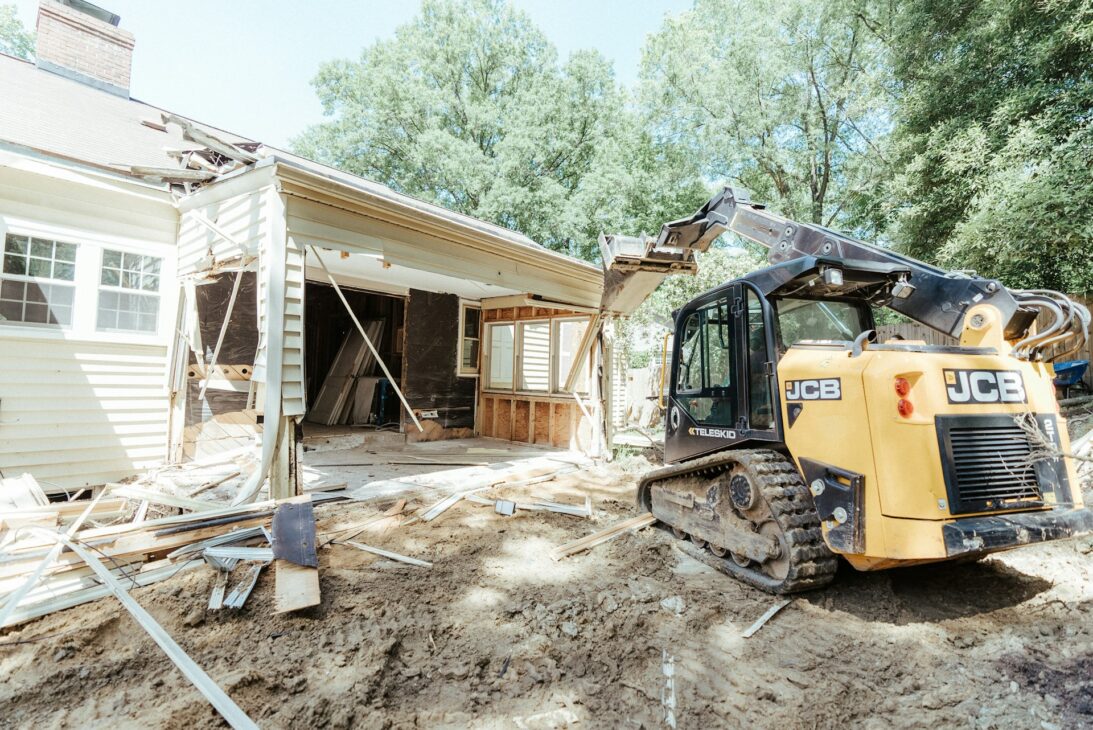
Completely refashioning a kitchen, building a second storey or completely changing the floor plan may require so much demolition that you are, in effect, rebuilding the entire place-but within the parameters of the existing footprint. When the wish list is lengthy, remaking the place is wise.
Think about the block, not just the house
Renovation work is normally thought to be the more affordable solution, and it almost certainly is if the scope of the works is limited. However the budget for an older property will invariably be higher. Hidden problems, harmony between the new and old, increasing services to standard and the limit of access all have their effect on the bottom line. If that is on your radar, it is worth speaking early with an experienced Sydney duplex building team to understand what your site can realistically support before you commit to any direction.
Compare the real costs, not the headline costs
A new build has its own expenses-demolition, permits, and a complete construction schedule. The difference is that this can be easier to estimate, because the builder is performing a full build to a new set of plans instead of responding to what’s uncovered behind a wall of plaster. When weighing up the two options, focus on what it will cost you to end up with the home you want, and factor in the cost of moving out, if you need to.
Factor in approvals and timing
Minor internal renovations likely require few approvals, whereas a large extension or a knockdown rebuild definitely will. Approvals pathways and timeframes differ from council to council and from project to project, so seek advice early. Your architect or builder should be able to tell you what your approval pathway is and what your lead time is likely to be before work begins on site.
Consider how long you plan to stay
If this is your family’s forever house, an argument for a rebuild has more weight. The floor plan is created for your lifestyle, up-to-date energy efficiency and a hassle-free living for years to come. If you are looking to sell soon, you can opt for a specific renovation that addresses the issues of the house and creates a higher resale value with minimal disturbance.
Energy efficiency and comfort
The shell of older homes was usually constructed with minimal insulation and single glazed. It is possible to upgrade, but it is much easier to build comfort in from the beginning. You can position a new home to get the benefit of sunlight; plan for cross-ventilation; and build it to current energy efficiency standards – all of which have a significant impact on how the home performs in summer and winter, and the costs over the years.
When renovating is the right call
Generally a renovation is the way to go when your home is a sturdy construction, the floor plan is pretty much perfect, the home you want to update is what you had in mind, and it has a character you want to keep. A good renovation can breathe new life into a house and keep all you loved about it.
When rebuilding is the right call
Rebuilding usually makes sense when the structure or services are failing, the layout fights you at every turn, your wish list is long, or the block offers more potential than the existing house uses. Working with experienced custom home builders lets you design around your family, your site and your budget, rather than around decisions someone made decades ago.
Final thoughts
There isn’t a one-size-fits all answer for everyone’s house. Being well informed at the outset can make the decision easier: an inspection, a good brief, what’s possible on your site and honest estimates for both options. Learn from people who’ve done each, ask lots of questions and be patient. Whatever you decide – renovate or rebuild – a comfortable family home is well worth the time and effort.
This article was submitted by Buildana, a licensed builder based in Fairfield, Sydney, working on custom homes, duplexes and knockdown rebuilds.