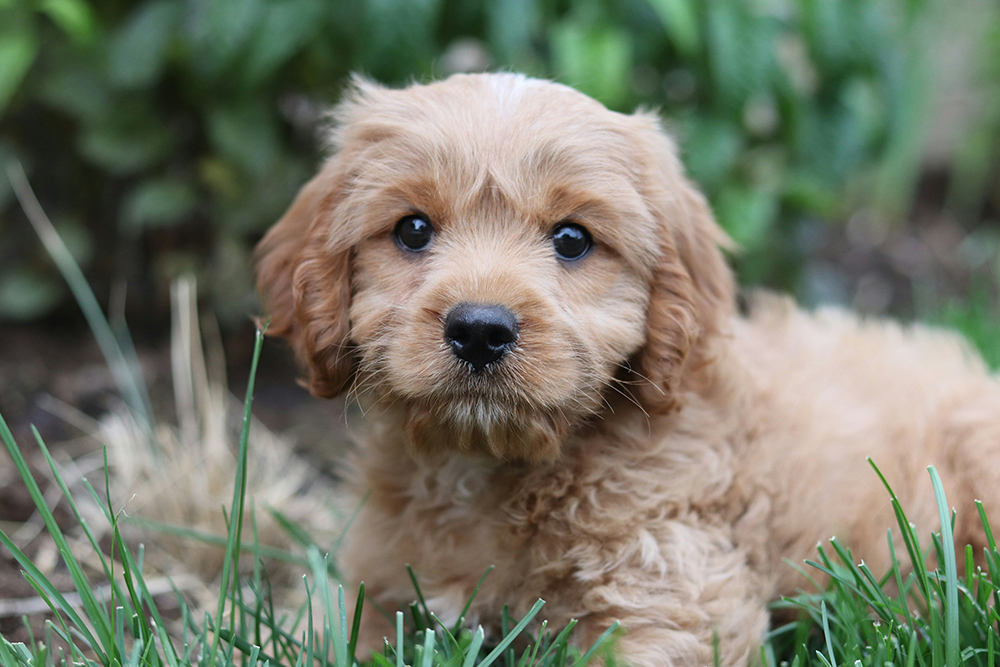
The Ultimate Guide to Surviving the Puppy Phase without Losing Your Mind
Surviving the Puppy Phase: No one tells you that inviting a puppy into your life is akin to inviting a small, sharp-toothed whirlwind of chaos that never sleeps, doesn’t read the ‘I need space’ signals you’ve been frantically giving off for the last two weeks, and thinks your ankle is a chew toy. The positive side? It’s not forever, it’s not insurmountable, and most of what you think of as a problem is natural growing and learning you can guide.
Why the Puppy Phase Feels So Brutal
Let’s face it: you’re exhausted. New puppy owners often find those early weeks more draining than they’d anticipated, and right there, between expectation and reality, is where the “puppy blues” set in.
Part of the problem is that, neurologically, puppies have more in common with human babies than most people realize. Their nervous systems are still developing. They have no impulse control, no bladder control to speak of, and no context yet for understanding what you’re looking for from them. When your puppy bites your hand for the fifth time in ten minutes and then races maniacally around the living room, he’s not being “naughty.” He’s a tired, overstimulated baby mammal with cortisol levels through the roof.
Cortisol, the stress hormone, accumulates in puppies who have been pushed past their threshold of stimulation. This is often what’s happening when, after being wound up like a spring for hours, your puppy suddenly loses the plot and becomes the “devil dog.” You may see biting, obsessive spinning, or the sudden inability to hear anything you say. When you recognize that kind of behavior as exhaustion rather than willful misbehavior, it will change how you react to it.
Behavioral problems are the number one reason dogs are surrendered to shelters, and a study in the Journal of Veterinary Behavior determined that formalized training under six months of age is critical for the long-term success of the dog-owner relationship. What both those facts add up to is this: the work you put in during this precise, relatively short period of time matters more than it will at any other point in your dog’s life.
Build a Routine Like You Mean it
Young dogs don’t only like to follow a routine, they actually need it. Consistent daily timing for meals as well as toilet visits, mental and physical playtime, training sessions, and relaxation set the order of the world for a puppy. If they can depend on eating at roughly the same time every day and the regular opportunity to relieve themselves and burn off energy, they become less stressed and more open to learning new stuff.
This is particularly true for toilet training, a process made much easier when you introduce familiar and predictable occasions for your puppy to do their business. The rule is simple: give the pup regular meals at the same time each day and take them outside first thing in the morning. Then bring them out again after their meal and play with them. Repeat the outdoor session after each nap and at the end of the day. It’s really the regular program that trains your puppy quickly and effectively, not the occasional luck when the right place is found.
The Socialization Window and Why it Can’t Wait
Timing matters here. Positive reinforcement works within a two-second window. If your puppy eliminates outside and you deliver a treat ten seconds later, the reward is being mentally attached to whatever they were doing when you handed it over, probably sniffing the ground. The treat has to arrive while the behavior is still warm.
Between the roughly three and sixteen week mark, a puppy’s brain is at the most critical developmental phase for socialization, where exposure to new people, animals, sounds, surfaces, and environments shapes their baseline response to the world for life. Miss this window and you’re stuck playing catch up for the rest of the dog’s life. Hit it well, and you have a dog who takes novel situations in stride.
The rub is that during that period, your puppy is not yet fully vaccinated. The vaccination schedule keeps them safe from a number of deadly diseases, but it also makes their brand new immune system an easy target for anything particularly nasty that they encounter in the outside world. Including something like parvovirus, which is everywhere and can be fatal, especially to a pup.
So you can’t just go plop your puppy down on a sidewalk café now that you have a new eight-week-old puppy, not if you want to hedge your bets on having a well-adjusted dog and a living, healthy one. But you also can’t just hide in your house, waiting for the vaccines to “kick in” either, because then you’ll miss that socialization window entirely.
This really is one of the genuinely hard parts of early puppy ownership. That’s exactly why enrolling in puppy training classes at a veterinary-supervised facility is the right call during this window. The other puppies are vaccinated, the environment is cleaned properly, and your pup gets structured social exposure, with the added benefit of starting their training foundation at the same time.
The Sleep Problem Most Owners Miss
Puppies should sleep between 18-20 hours a day. If your pup is up and about way more than that, a lot of that unmanageable chaos and biting might be simply due to over-tiredness.
When we see a puppy running around maniacally, our assumption is that they need more exercise. We need to tire them out. Unfortunately, more stimulation tends to make things worse, not better, as you’re loading more input onto a system that’s overloaded to begin with. What an overtired puppy needs is less, not more.
Put the puppy in their crate with a chew, walk away, and let them settle. Just like a toddler. Most owners are amazed to find out that the “crazy” they’ve been dealing with for the last three hours suddenly vanishes after a proper break.
How to Make the Crate Work For You
A crate isn’t a punishment. That’s the single most important reframe in puppy ownership. Dogs have a denning instinct, a natural pull toward small, enclosed spaces where they feel safe. A crate that’s introduced correctly taps into that instinct rather than fighting against it.
Start with the crate door open and treats scattered inside. Let the puppy choose to go in. Once they’re comfortable entering voluntarily, begin closing the door for short intervals while you’re in the room. Build up the duration gradually before you ever leave the house.
The crate also works directly against separation anxiety. Teaching a puppy to be comfortable alone starts at home, while you’re still there. Practice leaving them in a room with the door closed for five minutes, then ten, then thirty. Increase the duration before you add the variable of actually leaving. If you wait until the first time you have to go to work to discover whether your puppy can handle alone time, you’ve waited too long.
Biting: What Works and What Backfires
Play biting is not a sign of aggression. That’s just how puppies interact with each other. The play in your puppy is partially an attempt to play with other dogs. It likely wants you to chase it. It wants to bite a sibling’s ankles. It’s not being “dominant” or any other nonsense. It’s a puppy being a puppy.
You don’t want to stop play biting entirely, you want to teach bite inhibition: the understanding that teeth on skin ends the game. Physical punishment for biting, flicking the nose, grabbing the muzzle, alpha rolls, doesn’t teach bite inhibition. It teaches fear and can introduce a whole separate set of problems. What works is much simpler.
When teeth touch skin, the interaction stops. No noise, no drama, no eye contact. Turn away or step behind a door for thirty seconds. Then re-engage. Repeat consistently, every single time. You can also redirect to a chew toy the moment you see the puppy starting to mouth, give them something appropriate to bite rather than waiting for the mistake.
The key word is consistent. One person in the household doing this while another lets the puppy bite freely means the lesson never lands.
Mental Work Beats Physical Exhaustion
Young puppies cannot be pushed into exhaustion as that can hurt their joints. Growth plates in large and medium breeds do not close until a bit after a year. Hence, long runs and repeated high-impact exercise can injure them. Then how do you manage a high-energy puppy?
Mental stimulation comes to the rescue. A ten-minute training session that uses operant conditioning where you reward the puppy for obeying cues such as “sit” or “stay” is more exhausting than a thirty-minute walk. The same goes for puzzle feeders, snuffle mats, and food-stuffed toys which engage the puppy to solve problems.
Cognitive enrichment works because it uses the brain and as new synapses are forming in the young dog’s brain, thinking is really exhausting. Try replacing one bowl of kibble a day with a puzzle feeder and see how quickly your puppy settles down then.
Your Vet is a Behavioral Resource, Not Just a Medical One
Many new puppy parents view the vet as the last resort, the person you take your dog to when something is wrong. But your vet can provide a lot more value than just sick care: establishing a vaccination schedule, making sure your feeding content is up to snuff, and, most critically, being able to tell you whether the issues you’re seeing are behavioral or medical in nature.
A puppy with issues may just need more sleep and structure, however, if the issues are due to an underlying medical issue (pain, sensory problems, a developmental delay) your vet is the only person who can rule that out.
Early visits also “inoculate” your puppy to the experience of visiting the vet. A puppy that was carried into the vet all throughout that socialization window and just got cookies is a far easier patient to treat at 2 and 5 and 10 than one who had no experience of the vet other than a terrifying, painful vaccination appointment.
Getting Through it
The phase when your dog is still a puppy doesn’t last long. The most difficult aspects of it, such as biting, having accidents in the house, sleep deprivation, and needing to watch them all the time, happen in the first three or four months. But what you do during that period will influence the next ten years or more. Establishing a routine, making sure they get plenty of rest, and using positive reinforcement consistently will not only help you get through that phase but will get you the dog you were hoping for when you first decided to