
5 Flooring Mistakes That Can Lower Your UK Home’s Value
Flooring Mistakes That Can Lower Your UK Home’s Value: Flooring affects more than a room’s appearance. Buyers also notice whether surfaces look consistent, are suitable for the space, and are expensive to replace. The wrong decisions may not change a formal valuation on their own, but they can weaken buyer confidence and reduce the home’s perceived resale value.
Why Flooring Problems Affect Buyer Appeal
Most buyers assess flooring as a whole-house feature rather than a collection of separate rooms. Visible wear, abrupt material changes or signs of moisture suggest future work and additional costs. The aim is not to install the most expensive floor everywhere, but to create a coherent finish that performs properly in each area.
Five Flooring Mistakes That Create Resale Risk
These five issues can weaken confidence in the property and make the home feel less carefully maintained.
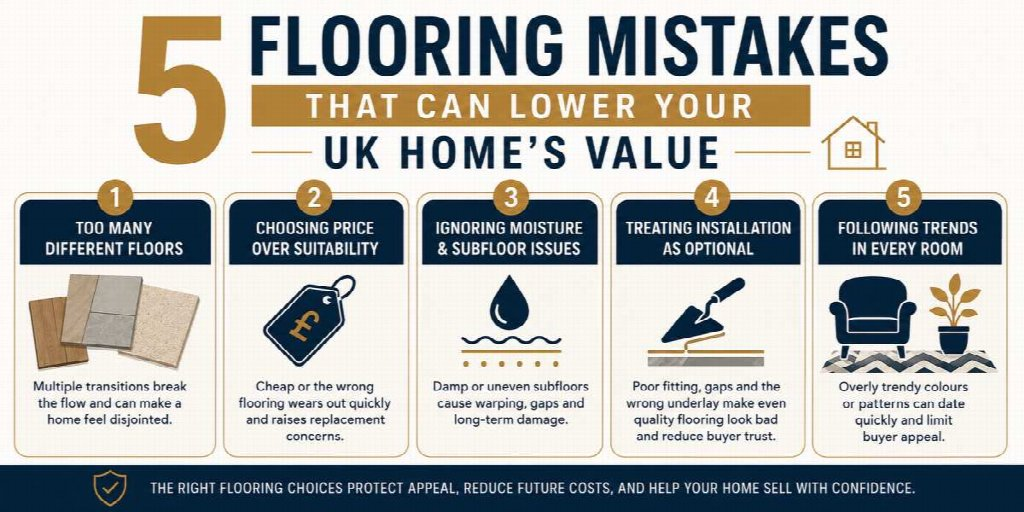
1. Mixing Too Many Flooring Styles
Using a different colour, material or pattern in every room can make the property feel fragmented. Some variation is necessary between dry and moisture-prone spaces, but repeated transitions may interrupt visual flow. Keeping connected hallways, living rooms and dining spaces consistent usually creates a calmer first impression.
2. Choosing Price Over Room Suitability
A low initial price offers little value if the surface wears quickly in a busy hallway or reacts badly to kitchen moisture. Specifications should match foot traffic, pets, cleaning habits and room conditions. Homeowners considering engineered wood flooring should compare the wear layer, finish, fitting method and approved rooms rather than assuming every real-wood product performs identically.
3. Ignoring Moisture and Subfloor Conditions
Installing over a damp, uneven or unstable base can lead to movement, gaps, damaged joints or visible lifting. These defects are difficult to disguise during viewings and may signal a larger repair bill. Moisture testing and subfloor preparation should therefore be treated as part of the flooring purchase, not an optional extra.
4. Treating Installation as a Cosmetic Detail
Poor cuts around doors, unsuitable underlay, inadequate expansion gaps and uneven transitions can make a good product look cheap. Where professional help is needed, using floor fitting experts from Flooring Surgeons in the West Midlands can help ensure preparation and installation requirements are considered before the finished surface is laid.
5. Committing Every Room to a Short-Lived Trend
Highly specific colours, glossy finishes or dominant patterns may suit the current owner but narrow the number of buyers who can imagine living with them. Character can still be introduced through one feature area, while connected spaces use more adaptable tones and finishes.
Protecting Resale Value Without Over-Renovating
The safest approach is to repair visible damage, reduce unnecessary transitions and match each material to its room. Consistency, correct preparation and credible product specifications usually matter more than copying the latest trend. Flooring should make the property feel ready to live in, not present buyers with another renovation project.